
Press release management system


Role
I led and still currently lead the design processes in this and other Arybe initiatives, alongside 1 other designer.
Project type
Internal system; Web app; Desktop; developed in Bubble.io
Timeline
2024-2026
Allocation
Devfy Tecnologia & Sherlock Communications
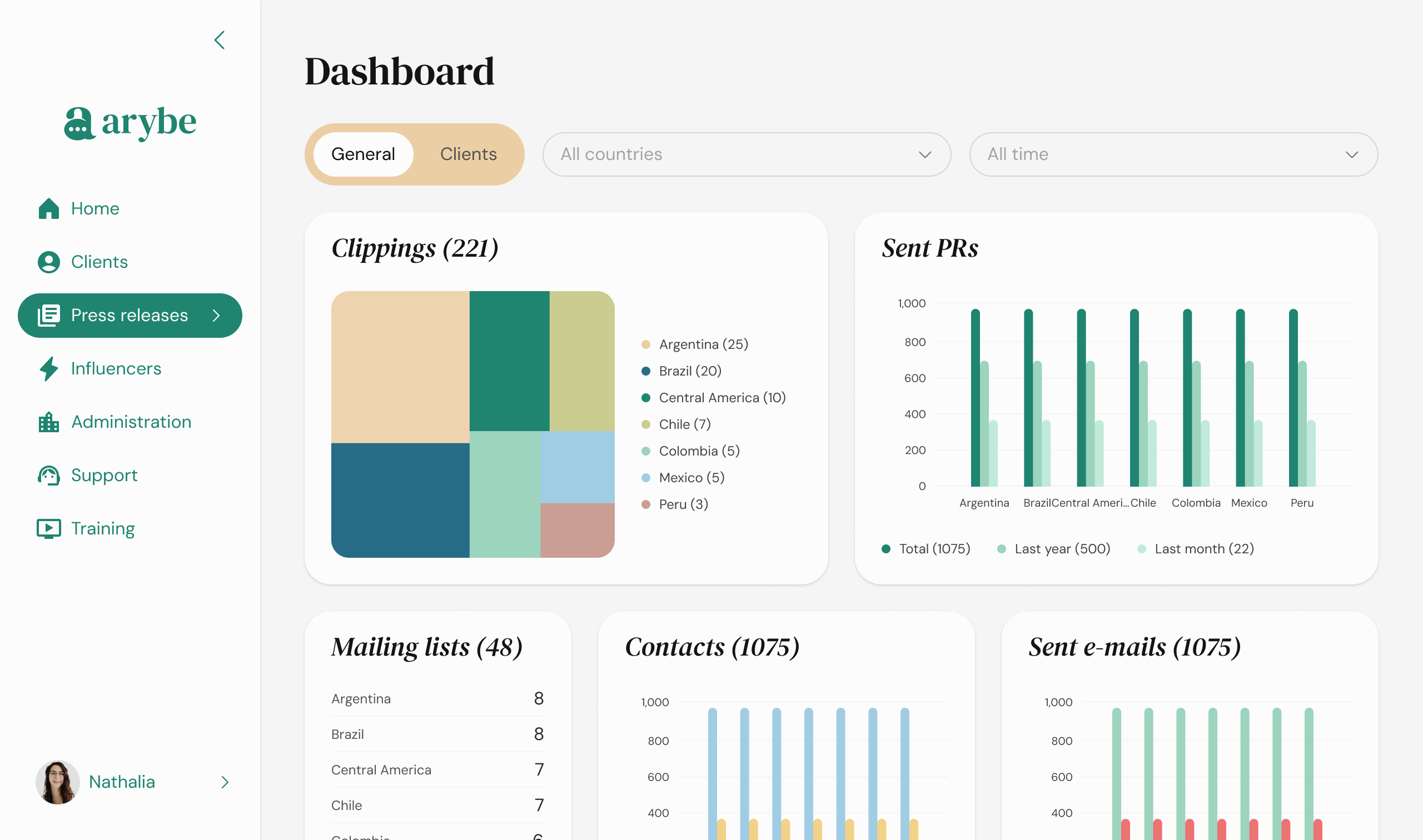
Arybe dashboard

Arybe is one of Sherlock Communications' internal systems

The company has been named the best communications agency in Latin America for the 7th time at the PRWeek Global Awards 2026, and Arybe was shortlisted for Best PR Software.

Context


Low adoption compromising cost reduction

Arybe was developed with the goal of replacing external platforms and tools that the company used to subscribe to for press release operations, aiming to reduce costs. However, the system had very low adoption among the employees.

To understand this use case, it’s important to know how the main user journey/flow inside the app is:

Creates Contacts

Creates Mailing Lists by selecting existing Contacts or importing a sheet

Creates a Press Release and selects a Mailing List to send it to

Sends Press Release and follows up on the results
Constraints


Finding direction with a cheap and quick first approach: Survey and Microsoft Clarity analysis

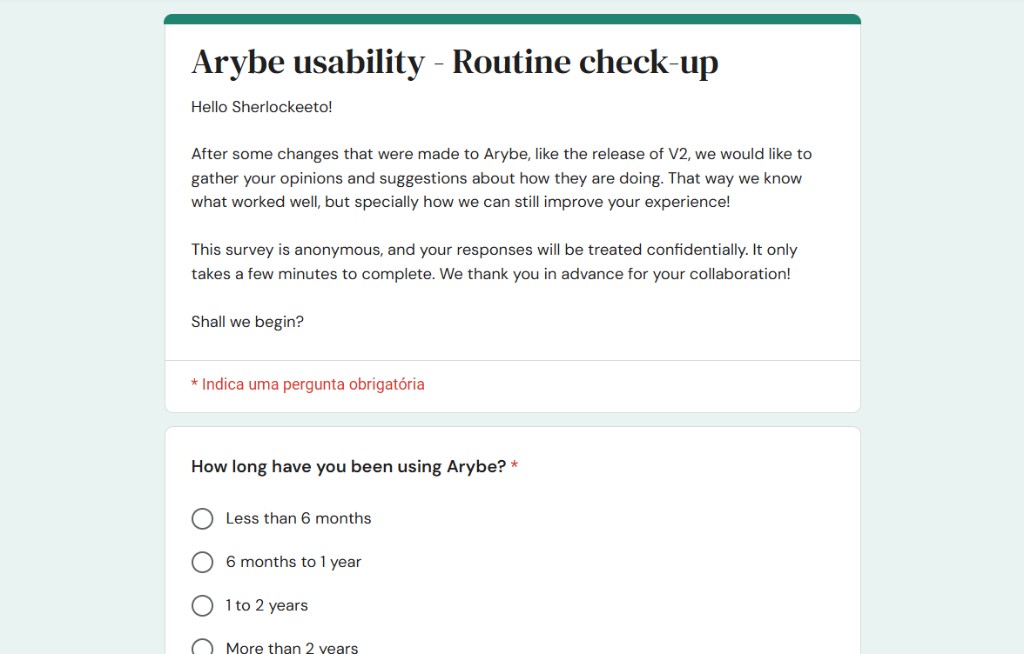
We needed a cheap and fast way to find out where we should dive in to investigate. So we ran a quick survey and collected some insights:

  1. 0% satisfaction rate;
  2. ‘Contacts’ and ‘Mailing lists features stood out:
    • 55% of the users pointed them out as problematic features;
    • 49% of the suggestions written in the open question had to do with them.
Usability quantitative/qualitative survey

Before the survey we had installed Microsoft Clarity in perfect timing so that by the time we were analysing the survey results, we already had enough data in Clarity to compare to. And the data confirmed ‘Contacts’ and ‘Mailing lists’:

  • Were the top visited pages, showing how they are important features and need to work smoothly;
  • Had several user session recordings that showed friction points.

Qualitative research


Group User Interview: Different friction points, but all connected

We didn’t have the approval to interview users individually, but we decided to invest in a qualitative research round, in group: we brought them all together in a meeting and were all ears.

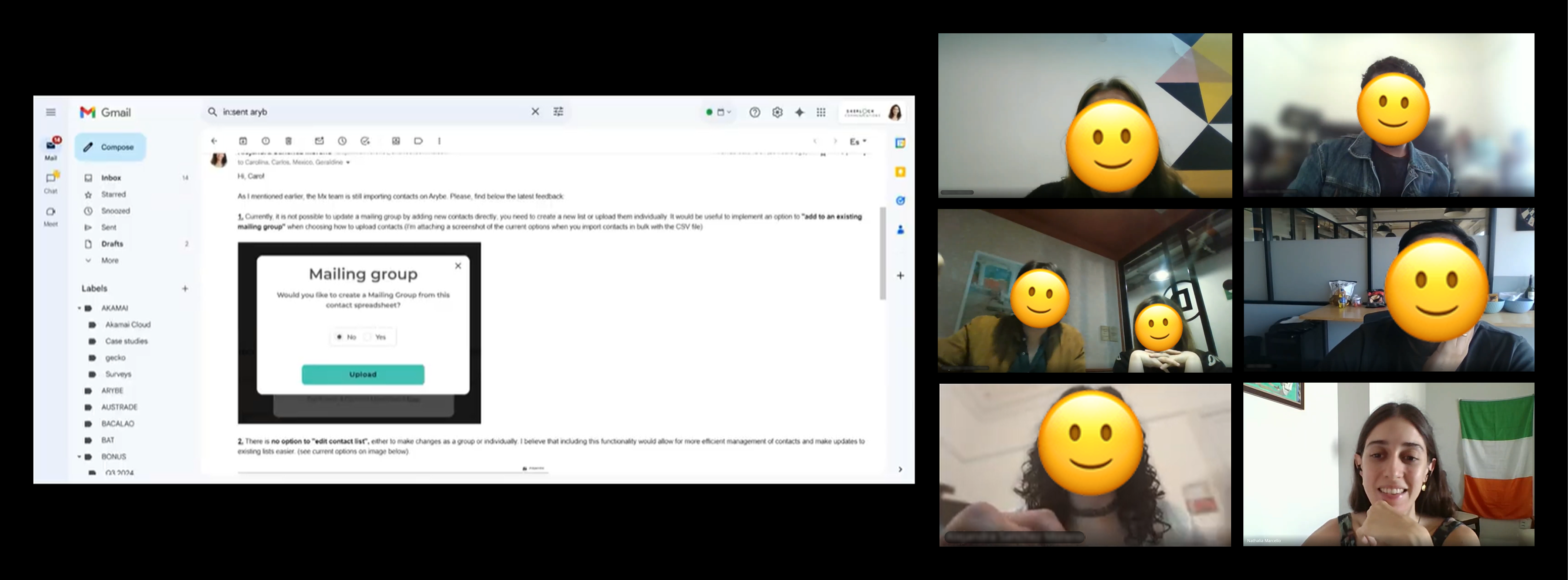
Users shared their screens, showed us how they actually use the system, and most importantly: helped us understand the root causes of problems and which ones should be prioritized. It was the very first time users had space to be heard, so it was a very dense meeting.

What they said confirmed the importance of the ‘Contacts’ and ‘Mailing lists’ features, but gave it a whole new meaning: they are the basis of the system's main user task (sending Press Releases) and impacts the entire user journey from end to end.

Contacts should be manipulated with flexibility across all other features.

Group user interview

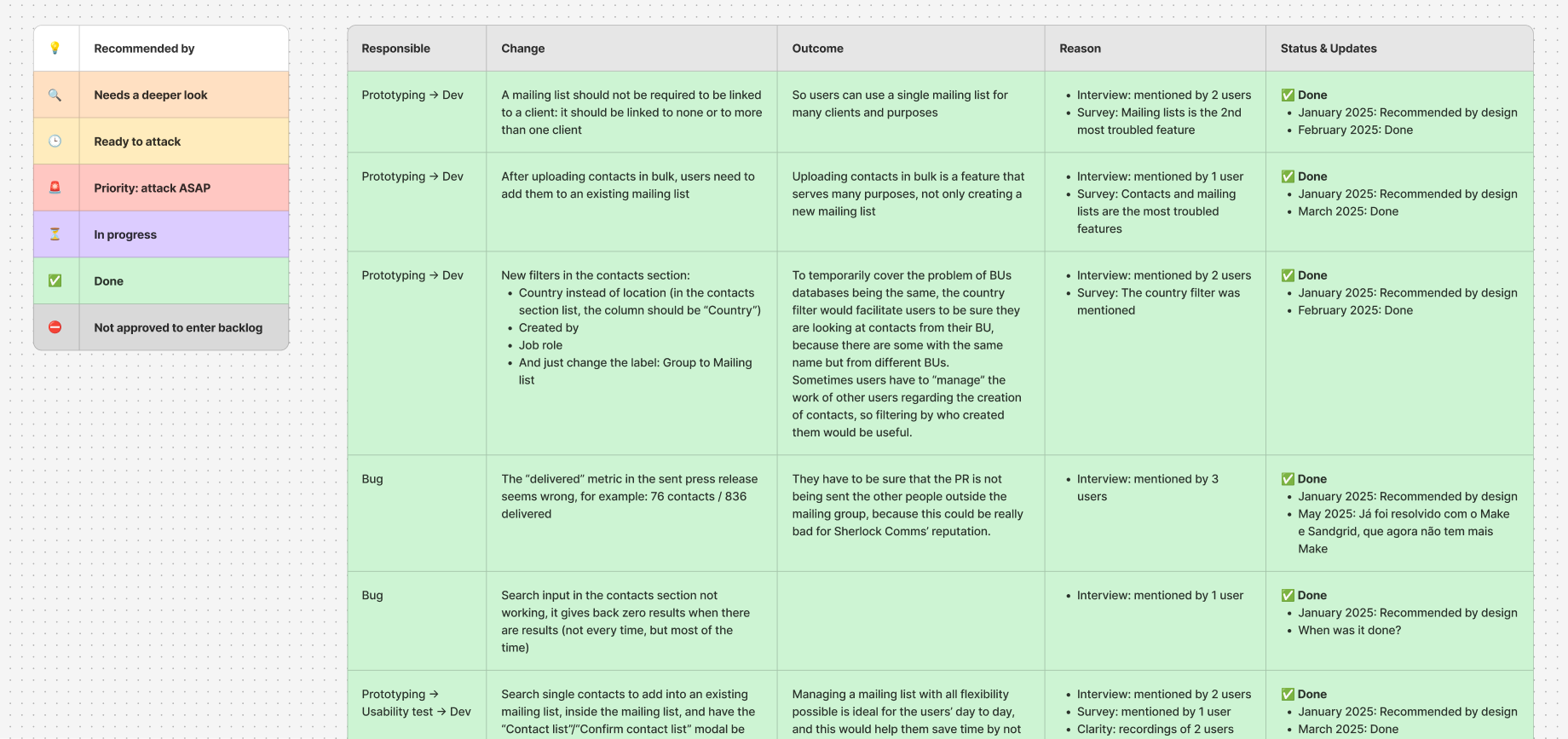
As a result, we combined all the research done so far in a mixed methods approach and created a roadmap/backlog list of 16 initiatives.

Roadmap list
Roadmap list

This backlog was done in 4 months.

Usability test and final experience


Managing contacts in context: usability-tested across the whole user workflow

After working on prototypes for most of the identified initiatives, we conducted usability and A/B tests to validate the proposed solutions. The main improvements shipped addressed new concepts to enhance usability:

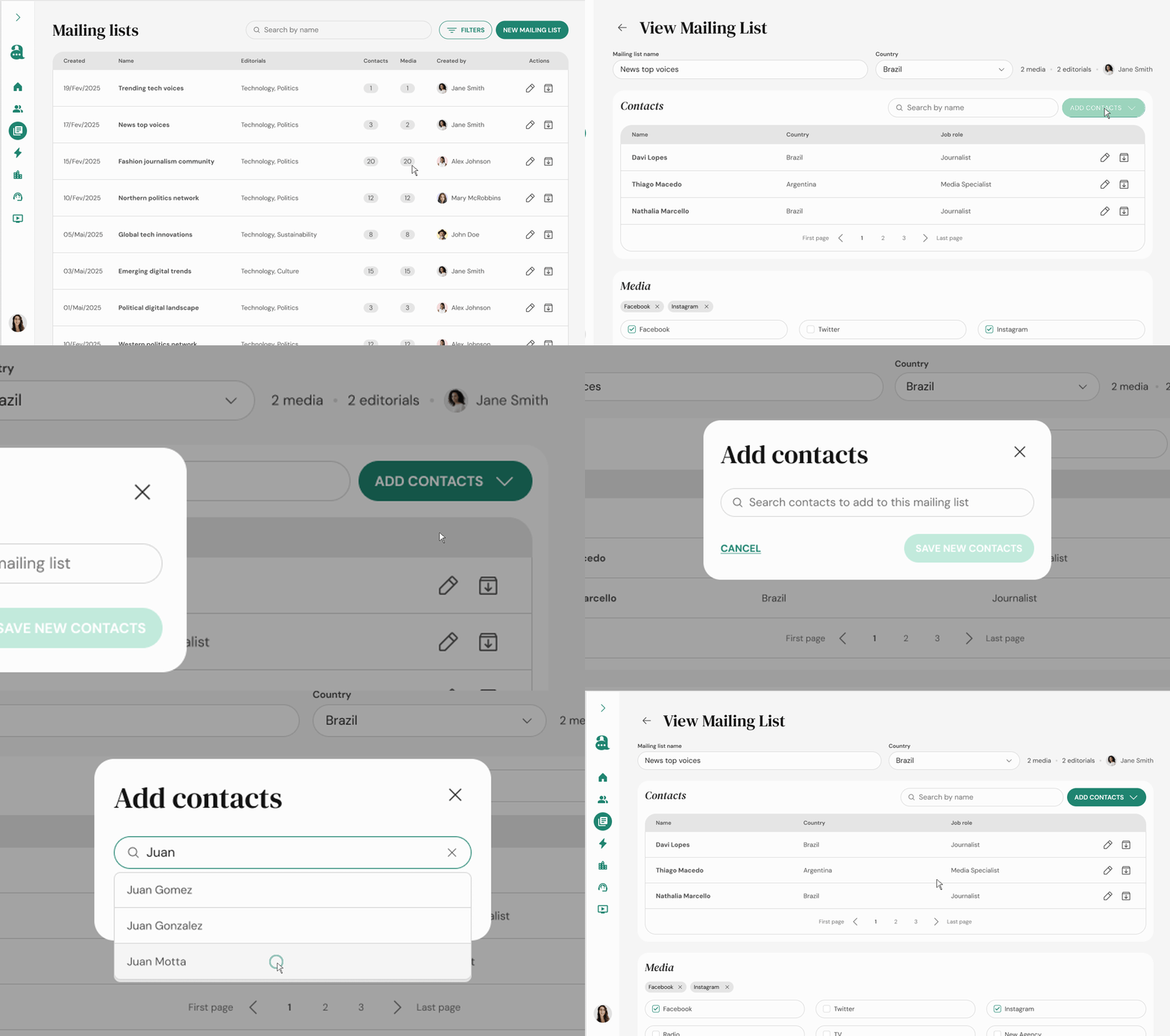
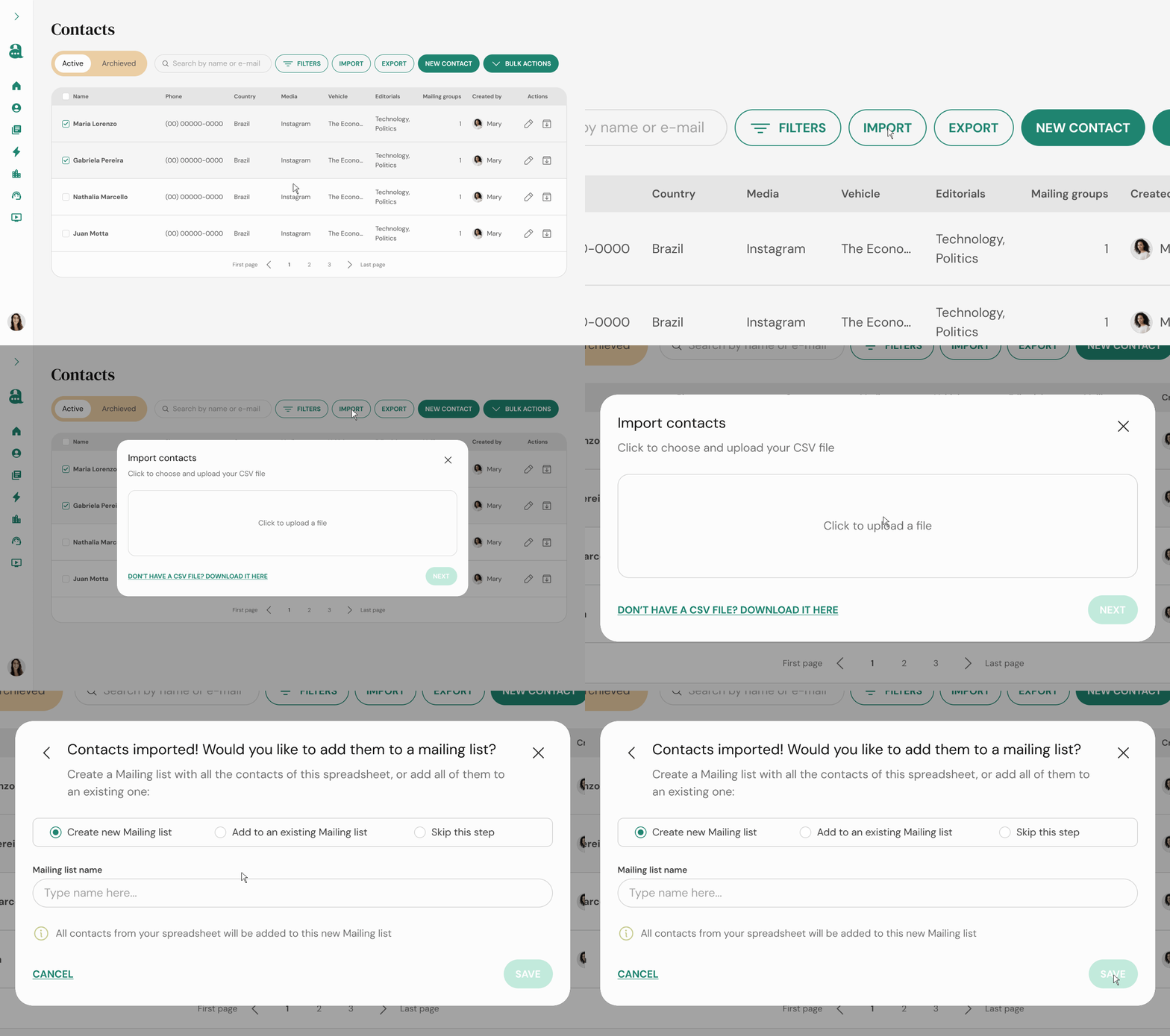
  1. 1. Shortcuts for managing contacts throughout the system and integrations between the Contacts and Mailing lists modules

    Adding existing contacts to a mailing listImporting contacts to a mailing list
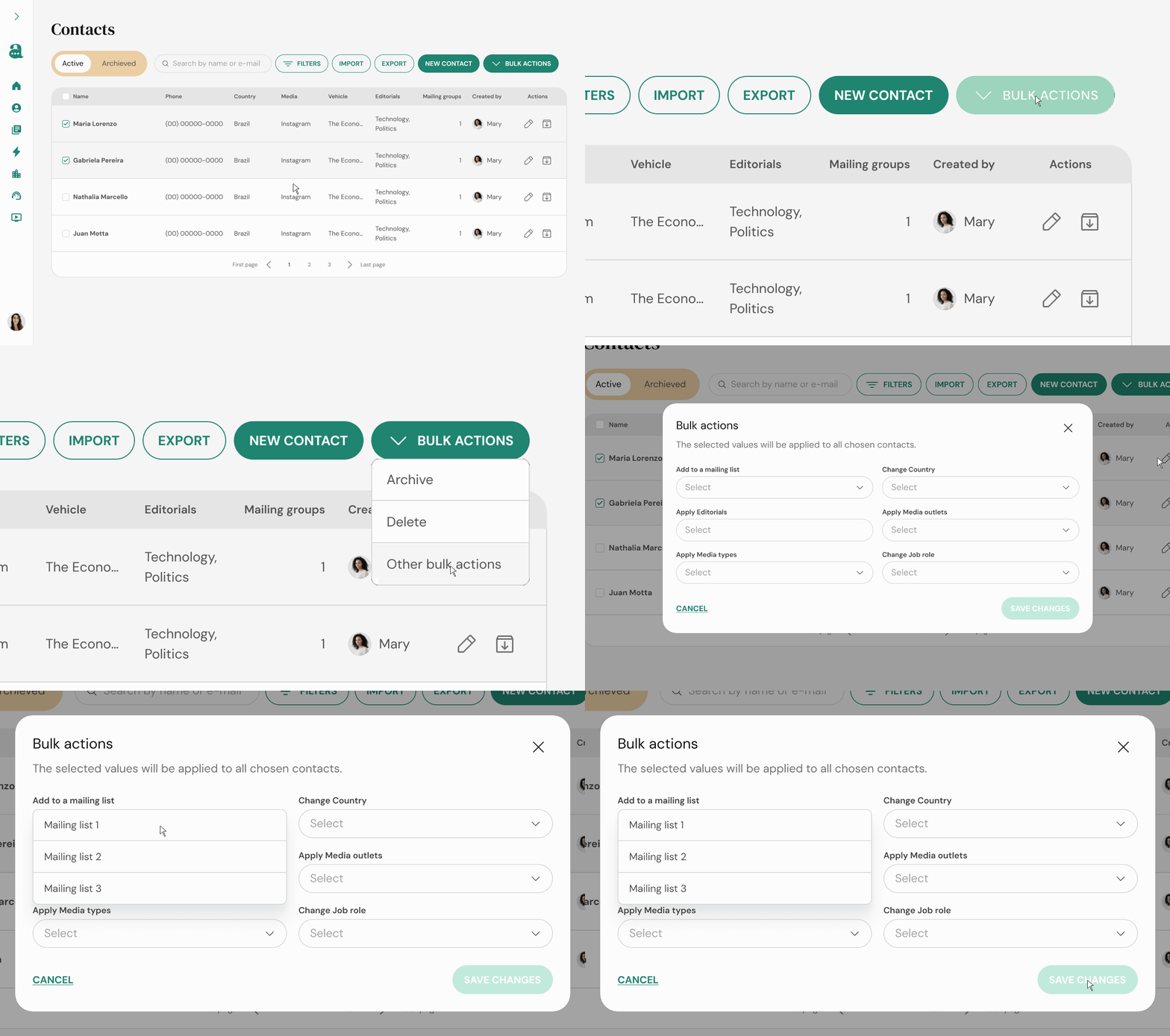
  2. 2. New filters and bulk actions in the Contacts list

    Bulk actions on the Contacts list
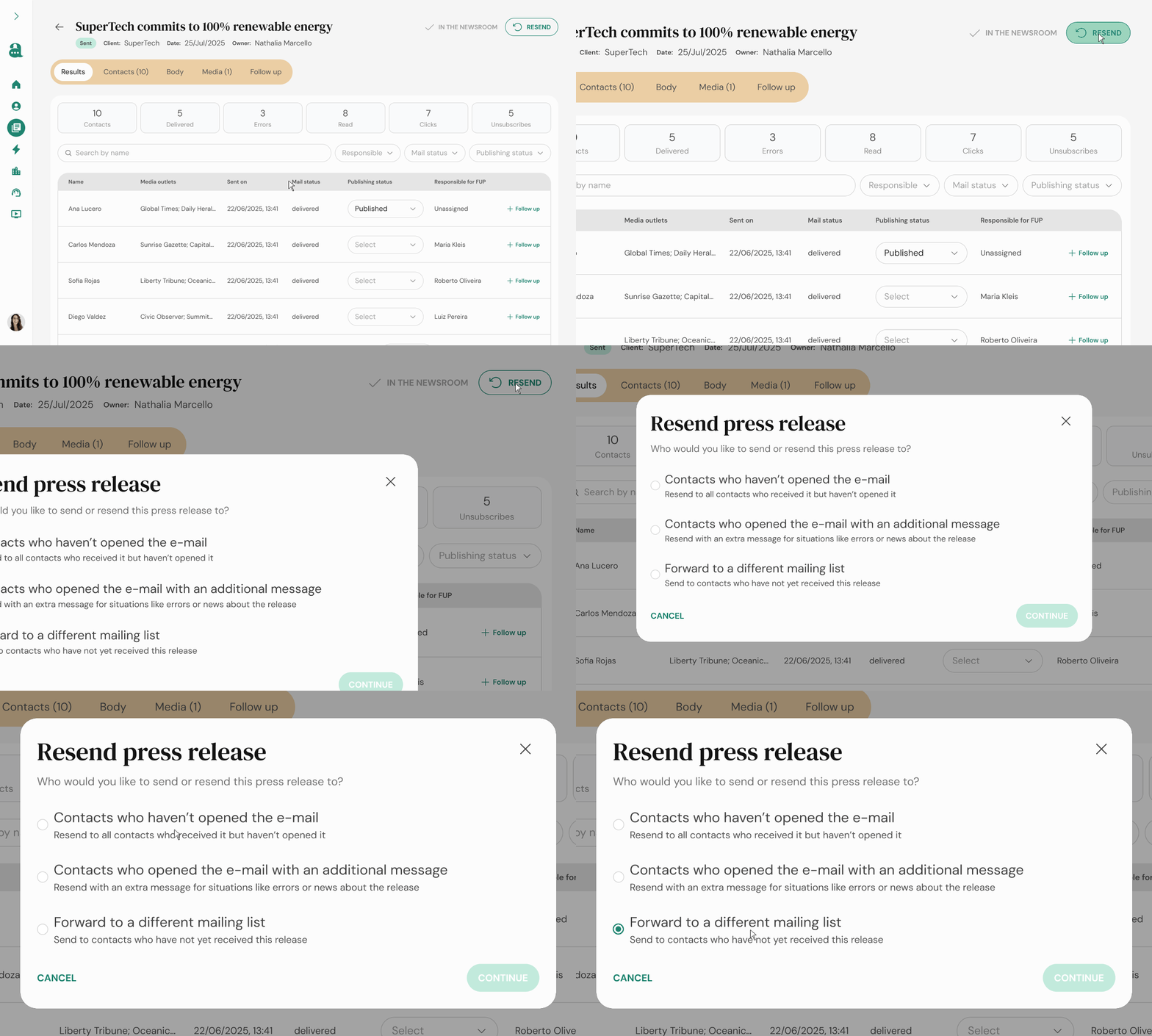
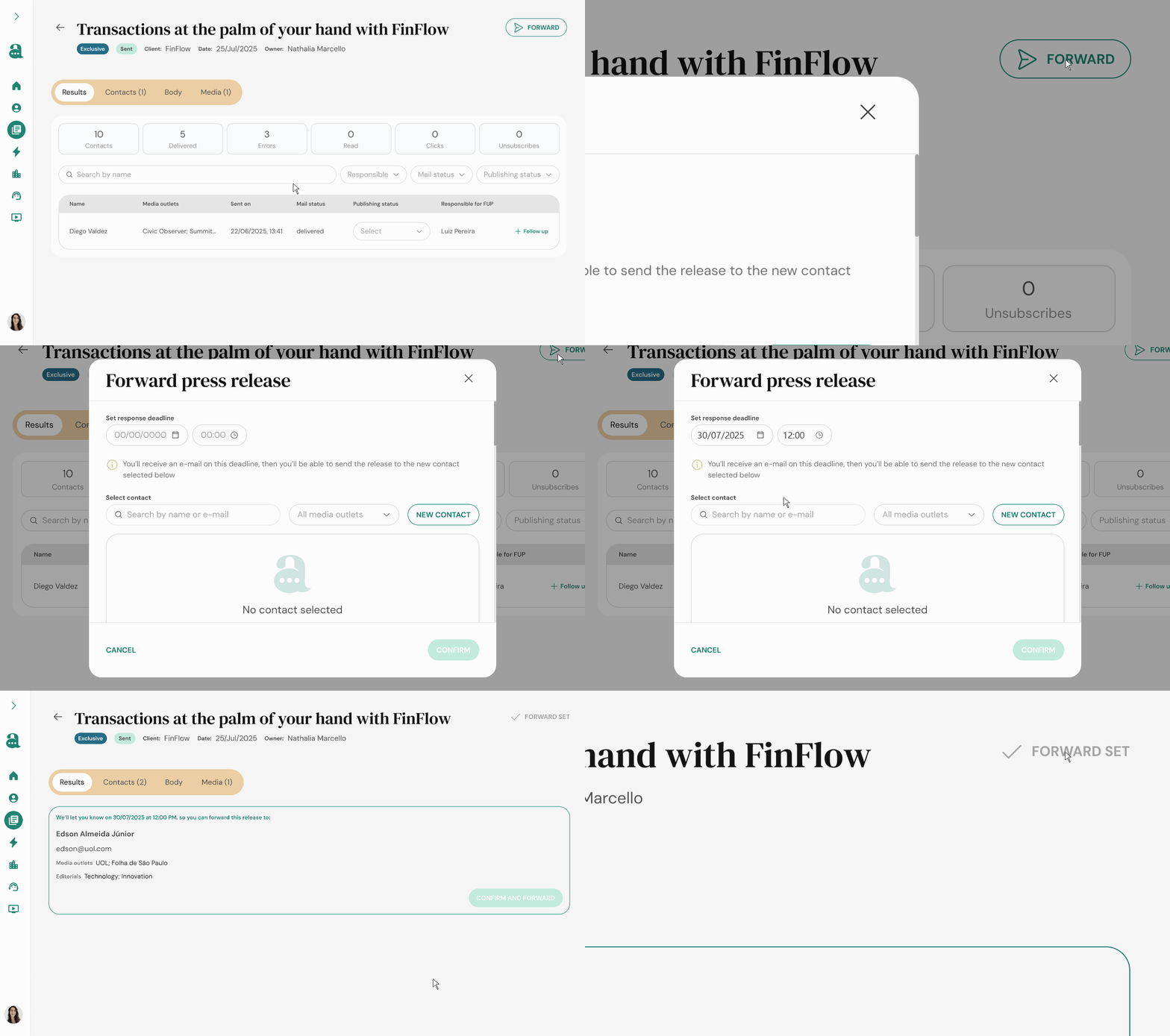
  3. 3. Resending and forwarding press releases to new contacts

    Resending a press release from the results screenForwarding an exclusive press release to a new contact

Results


14 → 70 active users 0% → 12,5% satisfaction

About a year after the first survey, we ran another one and compared the results.

The main goal, which was to increase adoption, was reached succesfully: The base of frequent users increased by 500% in 8 months.

Satisfaction increased significantly, but we are currently investigating why it’s still low, so that adoption is not compromised in the long term.

Next project

Midea Carrier

A better e-commerce customer journey through a logistics capacity control system.

2025