

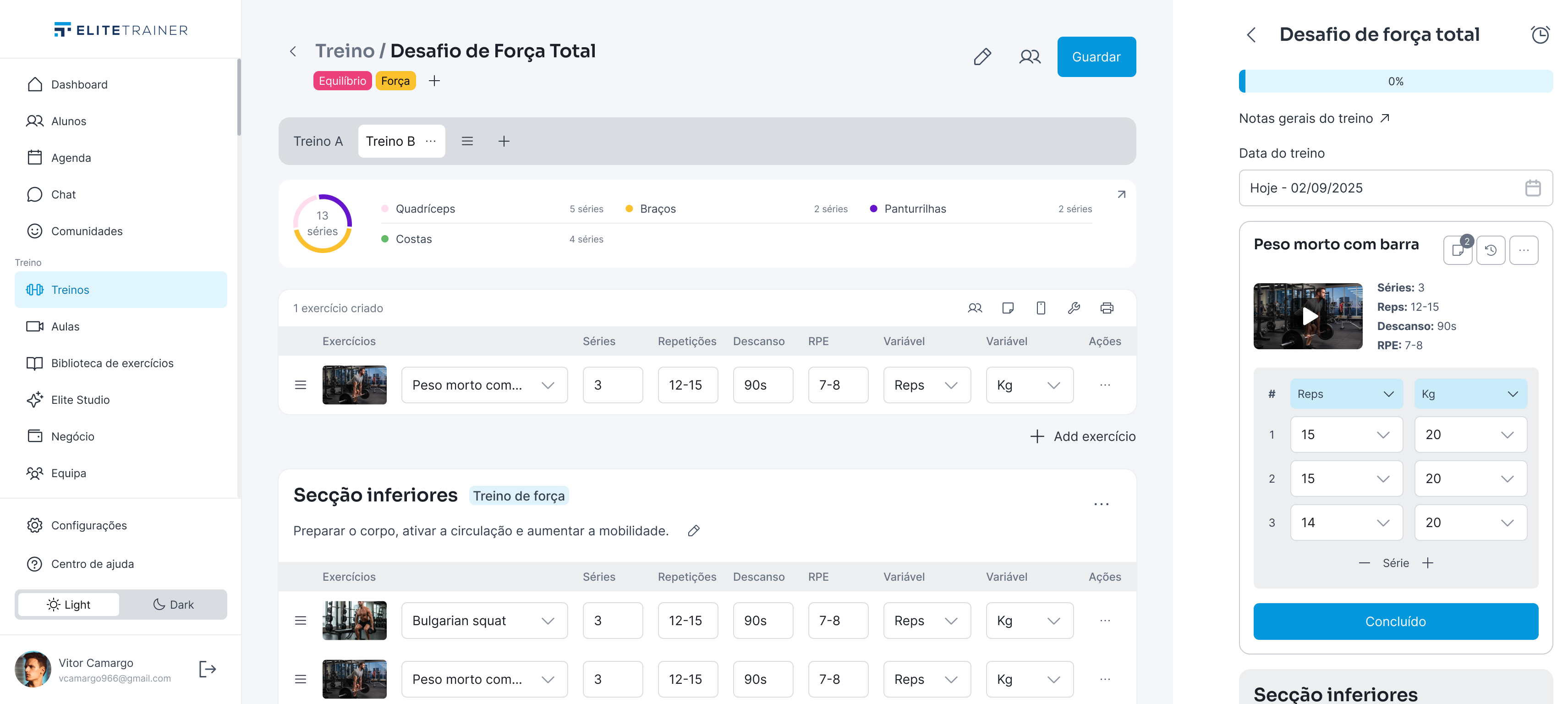
Digital coaching platform for personal trainers and their students


Role
I led product design for EliteTrainer at Devfy.
Project type
B2B2C SaaS; web app (desktop-first) + student PWA (mobile only).
Timeline
2024–2026
Allocation
Devfy Tecnologia & EliteTrainer
EliteTrainer trainer web app and student app

EliteTrainer is a B2B2C fitness SaaS from Portugal, where personal trainers run their practice from a desktop-first web backoffice and students train from a mobile app, white-labeled with their trainer’s brand.

The product goal is to centralize coaching (training, nutrition, schedule, communication) so trainers can scale their coaching practice, and students stay disciplined through a digital relationship.

Context


Two interfaces, one engagement problem

Students pay their trainer. Trainers pay EliteTrainer. The business only works if both sides come back to the product.

The KPIs tell the ideal story:

  • Activation: after the trainer invites a student, the student needs to not only activate their account, but log a first workout.
  • Engagement: successful workout registers and daily time in product indicates trainers are prescribing and students are working out.
  • Retention: if the number of students a trainer has oscillates too much, they might not renew their plan.
  • Student satisfaction: when students log workouts often, get feedback from their trainers and see their discipline in numbers, they feel that their hard work is being recognized - if you work out, you know that's motivating.
  • Revenue: a trainer that not only goes through all this but realizes the platform saves them time and effort will stick around.

Workouts are the core of the platform, and everything else (nutrition, calendar, chat, progress), was built to support this journey:

PT prescribes

Student trains and logs

PT sees it, responds, and adapts workouts through time

Student feels seen

Research


Trainers needed oversight. Students needed autonomy.

We mixed trainer feedback in the EliteTrainer exclusive forum with Microsoft Clarity data and ran surveys on both sides, then turned that into a research dashboard of design recommendations I owned.

Trainers were satisfied. Effort was low to moderate. Everything related to workouts was the most important part of the product.

What they needed: a unified view of training, and a better view per student.

What hurt: creating and managing workouts inside each student, plus instability.

Student satisfaction was fair to poor. Workouts were still the most important module. Effort looked low, but the experience was thin.

What they needed: flexibility and autonomy when logging training, and a real onboarding for new people.

What hurt: little control or history of their own progress, a feeling that their efforts weren’t recognized (inflexible logging made that worse).

Clarity backed the qualitative picture: the notification center was one of the most-used parts of the trainer dashboard, so trainers were already living in “who finished a workout.” The trainer forum showed that demand was concrete: 49 trainers voted for the platform to have a calendar feature, 13 voted for the notification center to have workout reactions and N asked for nutrition features - all indicate the coaching relationship is more than “open, train, leave”, and the app should facilitate that.

Research synthesis — trainer vs student, side by side
What each side needed from the same product.

Next project

Arybe by Sherlock Communications

Transforming an internal tool with low adoption into a solution used by 5x more users.

2024-2025